
Honkajoki Upper Secondary School offers a wide range of opportunities in the environmental field. Environmental education studies strengthen students' awareness of sustainable future choices and related career opportunities. A separate environmental education certificate can be obtained by completing optional environmental education studies. Environmental education is essentially about practical work, and a significant part of the studies is completed by doing and experiencing.
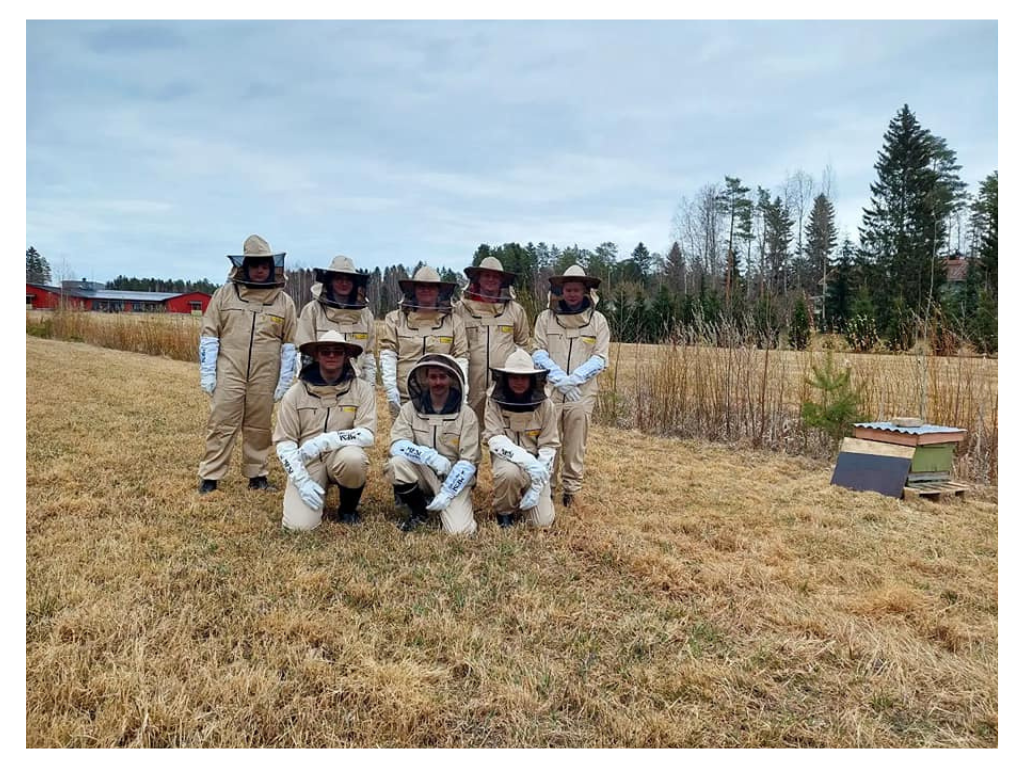
At Honkajoki Upper Secondary School, students learn with their hands in the soil, studying practical biology alongside classroom work. The high school has taken significant steps to increase biodiversity, and a wide variety of useful plants grow on the school grounds, such as apple, plum and pear trees, as well as blueberries, gooseberries, sea buckthorn and currants. Flower meadows have been established on wasteland, and there is also an apiary in the vicinity of the school. The bee colony ensures the pollination of plants and thus plays a major role in crop production. In addition, beehives act as a supporting factor in teaching, and the school's students have been able to learn about the care and maintenance of hives.
A Yle reporter visited Honkajoki High School, watch The atmosphere of environmental education at Honkajoki Upper Secondary School at the beginning of the school year.
Photo: Katariina Kannisto